

Babka is a Jewish cake with deep cultural significance. Originating in Europe it has spread to the USA, the Middle East and around the globe. This swirly delicacy has evolved from its humble beginnings and Jewish babka recipes now encompass a multitude of delicious variations!
Ever found yourself craving the sweet, swirling goodness of a traditional Jewish babka? You’re not alone, and making one yourself is easier than you think! Below you’ll find all the information you need to confidently whip up a delightful Jewish babka cake from scratch.

The origins of the Jewish babka
Originating in the Ashkenazi Jewish communities of Central and Eastern Europe, babka is a sweet, twisted, yeast-leavened bread/cake with a flavourful filling. Traditionally babka was made using leftover challah dough, as a simple way to turn a Shabbat staple into a delicious dessert.
Baked for Shabbat, festivals, and special occasions, each swirling slice of babka reveals layer upon layer of sumptuous filling – whether it’s rich and gooey chocolate, fruits or preserves, spices or nuts.

What makes Jewish babka different?
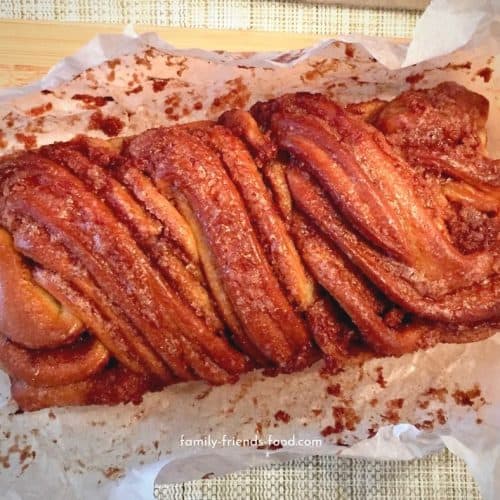
Jewish babka differs from other cakes with the same or similar name, that originate in different traditions. What sets it apart is not only the ingredients used to make it, but also the unique shaping and baking method. The beautiful layered and twisted design defines a Jewish babka, created by rolling the dough around the filling and then cutting and twisting before baking. This technique ensures each bite has swirls of delicious filling between layers of soft and sumptuous yeasted cake.

Polish babka on the other hand, is a tall, raisin-studded cake traditionally made at Easter. The name ‘babka’ means Grandmother in Polish, and the tall, round, fluted cake is said to resemble a grandmother’s skirts. Meanwhile potato babka is a Belarusian dish of potatoes, onions, eggs, and bacon or sausage! Definitely avoid mixing those up!

Babka goes global! National variations on Jewish babka
Baking babka is a long-standing Jewish culinary tradition, and one that shows no sign of dying out. Instead, it evolves wherever it goes, to create local variations on the classic theme.
In Israel, babka is rarely called babka, and is usually called ‘Krantz cake’ instead. While it has similar fillings and is swirled and twisted in the familiar way, the dough is often laminated and is more like a brioche dough than a simple bread.
Classic American babka, once a fairly low-key, homely dessert that was made using leftover challah dough, has been heavily influenced by the Israeli version since the opening of Breads bakery in New York in 2014. Breads adopted the recipe from Lehamim bakery in Tel Aviv, using a butter-enriched laminated dough and a sumptuous filling of Nutella and chocolate chips.

Here in the UK, babka varies greatly between bakeries, with some using a breadier dough and other a more buttery brioche-like dough. Some bakeries also laminate layers of dough using the rich filling rather than butter, which gives a delicious and indulgent quality to the finished loaf.
Whatever the variations in dough, fillings, lamination etc, however, there are some constants. A good babka should have a soft, melt-in-the-mouth texture and a generous quantity of filling.

Key ingredients for making Jewish babka
The success of any Jewish babka recipe relies on the quality of the ingredients. Each ingredient plays its role in creating the unique taste, texture, and look that babka is famed for.
To make dough for a Jewish babka yourself, you will need:
- Flour forms the primary structure of the cake. Plain (all-purpose) flour will ensure a tender babka with a fine crumb.
- Sugar provides sweetness, but also helps to give the dough a softer finished texture.
- Yeast is another vital ingredient in the babka, ensuring a well-risen and light cake. You can use either fresh yeast or instant yeast depending on your preference. The yeast fermentation also helps to give babka its rich, full flavour.
- Milk and butter enrich the dough keeping it soft and moist. If you prefer a parve babka, or are vegan, use plant-based milk and oil or dairy-free spread instead.
- Eggs are sometimes used to add richness to the dough, just as in challah. However I usually prefer to use an egg-free dough and let the flavour of the filling really shine. This also means that I can easily make a vegan babka.

Babka fillings
Most importantly, the real star of the show is the babka filling. Traditionally, Jewish babka would be filled with fruit preserve, cinnamon or nuts (or all three). The chocolate filling we know and love is a 20th Century American innovation.

You can use a poppy seed or mohn filling, similar to that used in hamantaschen, to create a delicious poppy seed babka. This is fabulous on Purim or at any time of year.

There are many other popular fillings, including sweet option such as halva spread, dulce de leche or guava, and savoury fillings such as cheeses, pesto or olive tapenade. Once you have mastered the classic Jewish babka, you can experiment with whatever fillings take your fancy!

The babka filling not only gives the cake its traditional, swirled look but also adds a burst of flavour that is marbled throughout the cake.
The shape of a babka
While the cutting and twisting of the babka dough gives it its signature swirly appearance, there is no standard shape for the finished cake. Although babka is usually baked in a loaf tin, you can also twist it into a ring and bake it on a sheet instead. This creates a beautiful babka wreath which makes a wonderful centrepiece.

It’s also possible to make individual mini babkas, by shaping and twisting small portions of filled dough into a knot. You can also put coils of twisted babka dough into muffin tins or mini loaf tins, and make mini babkas that way.


Toppings and final flourishes
You can be as elaborate – or not – as you like when it comes to toppings for your babka. Sprinkle over some sesame or poppy seeds, or a sweet streusel or crumb topping, before popping your babka in the oven to bake.
After baking, I like to brush the still-warm babka with a simple syrup to give it a glossy finish and added squidge and sweetness. Alternatively, a simple dusting of icing sugar makes for a beautiful presentation.
You can add a drizzle of melted chocolate, caramel, or icing, depending on the flavour of your babka. A sprinkle of nuts or chocolate shavings adds a final flourish.

Additions and variations to Jewish babka recipes
A traditional Jewish babka provides a wonderful canvas to experiment with. Below are some ideas for alterations and additions to the traditional recipe. Make it your own and tailor it to your personal preferences or those of your loved ones.
Dough variations
While the classic babka dough is plain and unflavoured, there is nothing stopping you from enhancing it with additions. A little vanilla essence or a spoonful of cinnamon or other spices can add another layer of flavour. Or go all out by replacing some of the flour with cocoa powder for a rich chocolate dough.

Filling variations
While chocolate, jam and cinnamon are traditional choices, there’s a world of fillings to consider. You may try incorporating fruit fillings like apple or cherry, or go for a savory twist with a cheese or herb filling. Nutella, halva or nut butter can also make delicious alternatives. The only limit is your imagination!


Dietary modifications
You can modify the basic babka recipe to suit various dietary requirements. Although some babka recipes use eggs, the one below is egg-free and can easily be made vegan by using plant-based milk and oil.
Step-by-Step Jewish babka recipe
Below you’ll find my traditional Jewish babka recipe, with a detailed guide from preparation to baking. You can use the buttons on the recipe card to switch between metric and US customary units.
This recipe makes two loaves. Since baking babka is a little more effort than other cakes, I like to make two at a time, and pop one in the freezer. There is also the option to easily scale the recipe if you want to make more than two loaves of babka at a time.

Preparing the dough
The first step is to warm the milk/plant-based milk before adding yeast and sugar. Then let it sit for a few minutes to activate the yeast. Meanwhile combine the flour and sugar, then add oil and the yeast mixture and mix until a dough forms. Knead the dough for about 8 minutes in the stand mixer (a little longer if you’re doing it by hand) until it becomes smooth and elastic.
Filling and shaping the babka
After letting the dough rise, cut it into two pieces and roll each one out into a rectangular shape. Spread your chosen filling evenly across each rectangle of dough, leaving a small border around the edges.
Roll the dough into a log shape along the long edge, then slice it down the middle, lengthwise. Twist the two halves together, with the cut side up, then place into a lined loaf tin. Repeat with the second rectangle of dough to make another babka loaf.

You can use the same filling in both loaves, or make two different babkas – one chocolate, one fruit, for instance.
Baking your babka loaves
After allowing the babka to rise for about half an hour, bake it at 180°C (350°F) for about 15-20 minutes, then brush with syrup and bake for a further 15 minutes until the babka turns golden brown and glossy. Remove from the oven and quickly brush with more syrup, then let it cool before enjoying.

The beauty of babka baking!
The beauty of baking your own Jewish babka is the freedom to innovate while retaining the essence of this timeless delicacy. Whether you stick to the traditional recipe or make it uniquely yours with new filling combinations or embellishments, it’s sure to be delicious!

Love, care and Jewish tradition!
The love and care you put into preparing your Jewish babka cake will be evident in every scrumptious mouthful. Have fun baking, and most importantly, enjoy your homemade Jewish babka!
If you want deliciously easy, family-friendly recipes like this delivered straight to your inbox, simply click here to subscribe. (Of course, I’ll never pass on your email address to anyone.)

📖 Recipe

Classic Jewish babka with fruit and nut filling
Ingredients
For the dough
- 200 ml milk or plant-based milk – I used oat
- 2 teaspoon dry active yeast
- 1 tablespoon sugar
- 400 g plain (all purpose) flour
- 2 tablespoon sugar
- 6 tablespoon melted butter or vegetable oil
For the syrup
- 75 ml water
- 100 g caster sugar
For the filling
- 200 g fruity jam or conserve
- 1 teaspoon cinnamon
- 4 tablespoon chopped pecans, walnuts or almonds
Instructions
To make the dough
- 200 ml (⅘ cup) milk or plant-based milk – I used oat, 2 tsp dry active yeast, 1 tbsp sugarMicrowave the plant-based milk for about 1½ minutes until 'hand hot'. (Alternatively heat in a small pan on the stove.) Whisk in the dry active yeast and 1 tablespoon sugar. Set aside.
- 400 g (3⅔ cups) plain (all purpose) flour , 2 tbsp sugar, 6 tbsp melted butter or vegetable oilIn the bowl of a stand mixer, combine the flour and 2 tablespoon sugar. Once the yeast mixture has started to foam (2-3 minutes), add it to the flour together with the oil. Fit the dough hook to the mixer and set the motor running on a low speed.
- Let the mixer run for 8-10 minutes, stopping the motor to scrape down the bowl as needed. The dough is ready when it forms a very soft, smooth, glossy ball that leaves the sides of the bowl clean.
- Transfer the dough to a lightly oiled bowl and cover with a lid or plastic wrap. Leave to rise until doubled in size. This will take 1-2 hours in a warm place, or can be done overnight in the refrigerator.
To make the syrup
- 75 ml (⅓ cup) water, 100 g (½ cup) caster sugarPut the water and sugar in a small saucepan and heat gently, stirring, until the sugar is fully dissolved. Cover and set aside.
To fill, shape, bake and finish the babkas
- Line 2 loaf tins with non-stick liners or baking parchment.
- Remove the dough from the bowl, gently squash out the air, and knead lightly for a minute or two. Cut the dough into 2 parts.
- Roll the first piece of dough out to give a rectangle of thickness 4mm (about ⅛ inch) – the dough will shrink back as you roll it so be patient and keep moving/turning as you roll.
- 200 g (1 ⅕ cups) fruity jam or conserve, 1 tsp cinnamon, 4 tbsp chopped pecans, walnuts or almondsSpread half the jam over the dough, then sprinkle over half the cinnamon and chopped nuts. Roll up as tightly as possible along the long edge.
- Slice the roll lengthwise and gently twist the two pieces together, cut side uppermost. Place the twisted dough into one of the prepared tins.
- Repeat with the remaining dough and filing ingredients to make the second loaf. Cover the tins with a clean tea towel and set aside to rest/rise for 30 minutes.
- Heat the oven to 180°C (350°F).
- Bake the babkas for 15-20 minutes. Quickly remove from the oven, brush generously with syrup, and return to the oven. Bake for another 15 minutes. The babkas should be risen and lightly browned.
- Remove from the oven and brush on more syrup – be generous as the syrup gives a lovely shiny finish, and helps the babka to be really sticky and gooey! Cool in the tins for 5-10 minutes then transfer to a wire rack to finish cooling.
Notes
Nutrition
More delicious babka recipes
If you enjoyed making this delicious fruit and nut babka, you might also like to make:


Jewish Babka Recipes FAQs
Jewish babka has a distinct identity due to its traditional ingredients and specific preparation methods. It typically features a rich, sweet dough filled with fruit, chocolate, cinnamon or other fillings, which is sliced and twisted before baking. This creates a beautiful pattern when cut, and a deliciously layered texture.
Once cooled, your babka should be wrapped well and stored in an airtight container at room temperature. It can keep for up to two days – if it lasts that long!
For longer-term storage, wrap in layers of cling film (plastic wrap) and foil, before freezing for up to three months. You may prefer to freeze individual slices, interleaved with greaseproof paper, for quick treats without having to thaw a whole loaf. Pop them in the toaster for a warm slice of delicious babka at any time.
Absolutely! While we usually think of a traditional Jewish babka recipe using chocolate or cinnamon, you can experiment with different flavours as I have done here. Any soft or spreadable filling that you can roll up in the dough, such as fruit jams, nut butters, or even a sweet cheese mixture, can bring an exciting variation to the traditional recipe. You will need around 1-1½ cups of filling to make two babka loaves.


Leave a Reply