

Shavuot is a joyful and important Jewish festival with a wealth of customs and traditions. From late night study to floral decorations and delicious dairy recipes, its celebrations are diverse as well as meaningful.
The festival of Shavuot is one of the three annual pilgrimage festivals of antiquity. In ancient Israel, Jewish people would travel to Jerusalem to bring offerings at the Temple. Today we celebrate these important days with special synagogue services, enlivened by unique customs and traditions and – of course! – special symbolic foods and delicious traditional dishes.
Around the world, Jewish people will be gathering in synagogues and homes to mark these special days. Read on to learn more about the history of Shavuot, how it is celebrated, and the delicious foods and traditions that have been passed down for generations.
Or if you just want all the Shavuot recipes, click here!

What is Shavuot?
Shavuot is one of the three ‘foot festivals’ or pilgrimage festivals. It falls in late Spring/early Summer each year. The other foot festivals are Succot, in the Autumn, and Pesach, which is exactly seven weeks before Shavuot.
In ancient times, Jewish people would travel to Jerusalem on these festivals, to bring offerings at the Holy Temple. The festivals were linked to the agricultural cycle, and provided a deep connection between the Jewish people, our beliefs, and the land of Israel itself.
Following the destruction of the Temple, the festivals have been marked in different ways. Joyful synagogue services together with home-based customs and traditional foods have maintained the central place of these festivals in the Jewish calendar. We come together and celebrate the meaning of these holy days, even in the absence of the Temple.

Why is Shavuot important?
Shavuot was an opportunity for Jewish people living in the ancient Land of Israel to bring the ‘first fruits’ of their harvest (‘bikkurim‘) to the Temple as an offering. Farmers used ribbons to mark the fruits that ripened first in their fields. They could then carefully collect them and bring them to Jerusalem.
The commandment to bring bikkurim specifically applied to the “seven species” of the Land of Israel – wheat, barley, grapes, figs, pomegranates, olives, and dates. You can learn more about these special grains and fruits here.
The festival also celebrates the receipt of the Torah on Mt Sinai, following the Exodus of the Jewish people from slavery in Egypt. On this day, the entire Jewish nation stood before the mountain while Moses ascended and received the Ten Commandments.
Shavuot is therefore doubly important! We renew our covenant with G-d and the Torah, and also celebrate the harvest and the agricultural cycles that sustain us.

What is the meaning of “Shavuot”?
The word ‘Shavuot’ literally means ‘weeks’ in Hebrew, and the festival is sometimes referred to in English as the “Feast of Weeks”. This is in reference to the seven week period known as the Omer which starts on Pesach (Passover) and ends on Shavuot.
When is Shavuot celebrated?
Shavuot falls exactly 49 days (seven weeks) after Pesach, on 6 Sivan in the Jewish calendar. This is usually in May or June in the Gregorian calendar.
You can use Hebcal to find accurate dates of when to celebrate Shavuot.

How is Shavuot celebrated? – Traditions and customs
There are many beautiful Shavuot traditions and customs in Jewish communities around the world. Some of the most important are:
Tikkun Leil Shavuot – a holy ‘all-nighter’!
According to legend, the Jewish people overslept on the morning they were due to receive the Torah! I can see them now, stumbling bleary-eyed to the sides of Mt Sinai in a sleepy haze. Oops.
To make up for our forefathers’ tardiness, there is a tradition to stay up all night on the eve of Shavuot, studying Torah and Jewish thought. This is known as Tikkun Leil Shavuot. By staying awake all night learning, we guarantee that we are ready to eagerly receive the Torah at first light.

Say it with flowers
It is traditional to decorate our Shuls (synagogues) and homes for Shavuot using fresh flowers and greenery. This recalls how Mt Sinai burst into blooms as Moses ascended to receive the Torah.
While any and all flowers and foliage can be used, in the Middle East, roses were the most common flower used in Shavuot decorations. As a result, Shavuot became known in some communities as the Festival of Roses.

Reading The Book of Ruth
Megillat Ruth (The Book of Ruth) is read during morning services on Shauvot, and there are a number of reasons why this particular book is chosen for the festival.
Firstly, the story takes place during the barley harvest season, so it is appropriate for a festival celebrating the harvest. Secondly, Ruth’s great-grandson King David was born and died on Shavuot.
Finally, we recall that Ruth was a sincere convert who embraced Judaism and accepted the Torah and all of its commandments. On Shavuot, all Jews are reminded that we must do just that – receive the Torah wholeheartedly and strive to live by its guidance.

Hearing the Ten Commandments
On Shavuot we celebrate the receipt of the Torah at Mt Sinai. The Ten Commandments were announced directly to the Jewish people, who stood in awe around the mountain.
To recall this wondrous event, and renew our dedication, it is customary to hear the Ten Commandments read aloud in the synagogue.

Festive meals!
Of course no Jewish festival is complete without some delicious festive foods! Shavuot has an abundance of unique dishes and food traditions. These include dairy desserts, special challot, and dishes highlighting seasonal produce and the harvest’s bounty. Continue reading for more details, or simply browse all of my Shavuot recipes, here.

Special Shavuot foods
Shavuot is a time to indulge in delicious treats and special symbolic foods. While many people consider Shavuot to be “the dairy festival”, when cheeses, creamy desserts and other milk-based dishes take centre stage, there are also many non-dairy and plant-based customs. You can read more about them in this guide to Vegan Shavuot recipes.

Dairy foods
I have heard a number of reasons for the tradition of eating dairy foods on Shavuot. The first is that the Israelites at Mt Sinai eschewed meat in order to avoid breaking the as-yet-undisclosed rules of kashrut.
Another suggestion is the reference to the Torah’s description of Israel as a land flowing with “milk and honey.” By making sweet, dairy dishes, we bring to mind the bounty of our ancestral homeland. This seems especially relevant on a festival that celebrates the harvest, as Shavuot does. Look no further than these cream and honey scones to really lean into this idea!
However, I think the most likely explanation for the abundance of dairy Shavuot recipes is simply one of practicality. When our ancestors were farmers and herders, this would be the time of year when their herds began to produce plenty of milk after the dry months of winter. These animals would have recently given birth to new calves, lambs and kids, and would be at the height of their milk production cycle. For our ancestors, finding a way to use this fresh milk and enhance the Shavuot festival would have been a win-win situation!
Traditional Shavuot dairy dishes include both savoury and sweet options. I love to keep it simple with a gorgeous cheeseboard and an array of fresh salads, but quiche, pashtida, or a cheesy pasta bake are all lovely. For dessert, cheesecake or blintzes are classic, but ice-cream, tiramisu or panna cotta make for less common but still indulgent choices.
Some of my favourite diary options are below, or you can browse all my Shavuot recipes here.
- Thunder and Lightning! A Unique Cream Tea
- Cheat’s cheese kreplach – crispy cheese ravioli with garlic butter
- Smoked salmon dauphinoise
- Individual mini berry cheesecakes – a fruity treat for Shavuot or all Summer long!
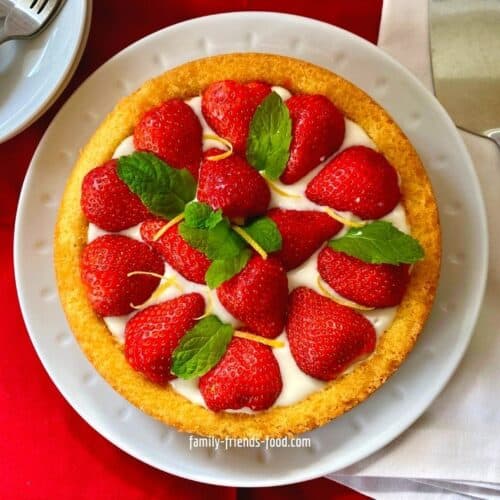
- Strawberry cheesecake flan – a simple and delicious Summer dessert
- Easy feta cheese dip – quick & delicious!
- Goats cheese strudel with baklava stuffed pastry
- Grilled Peach Salad with Pecans and Feta




Pan de los Siete Cielos – bread of the seven heavens
Sephardic Jews have a custom to make Pan de los Siete Cielos or Los Siete Sielos – “the bread of the seven heavens” – on Shavuot. This is a round loaf representing Mt Sinai, surrounded by numerous symbols crafted from the dough. The bread is typically rich and sweet, sometimes flavoured with spices. So you can use any challah dough recipe that you enjoy.
The loaf below was made using my super-easy 1-hour challah recipe, using about ⅓ wholewheat flour and ⅔ white flour. One quantity of dough was perfect to make this loaf plus a small roll.

To shape your loaf, first make a central ball of dough. Then surround it with seven rings of dough, said to represent layers of cloud around Mt Sinai. You can then make your chosen symbols from small pieces of dough and attach them to decorate the loaf. Some popular symbols include:
- The ladder that connects Heaven and Earth, from Jacob’s dream
- Torah scrolls and/or Tablets of the Law
- Miriam’s well – not entirely sure what this would look like?
- The doves from Noah’s ark
- Other animals including fish or serpents
- A hamsa 🪬
You can also choose any other Jewish symbol you like, or any object that has a special meaning to you or your family.


White foods
The colour white is often considered a symbol of purity. Therefore white foods may be served as part of a Shavuot meal. As well as fresh dairy items and cheeses (see above) this can include white rice, or white polenta.
Some communities also make a milky rice pudding for Shavuot, sometimes sweetened with honey.


Dishes with flowers
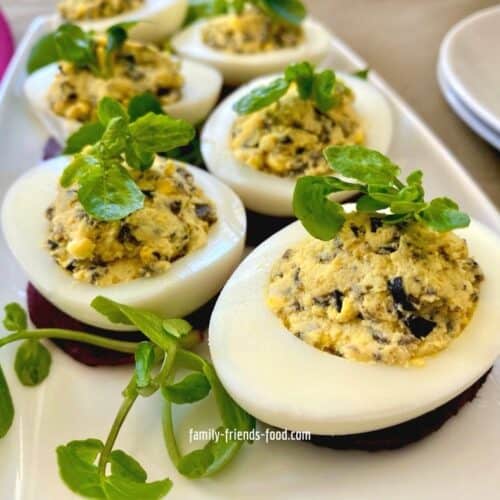
Because of Shavuot’s association with flowers, particularly roses, dishes flavoured with rosewater, or made in the shapes of flowers, are popular. For instance you could make flower-shaped challah rolls, or these wonderful crispy potato roses.
Using edible flowers in salads or to garnish festive dishes is another lovely way to bring the floral motif of the holiday to your table.


Dishes featuring grains – barley and freekeh
Megillat Ruth takes place during the barley harvest, and Ruth shares a meal of ‘roasted grains’ i.e. freekeh, with husband-to-be Boaz. As such, many people have the tradition of eating these grains as part of their Shavuot feast.
I love a grainy salad such as tabbouleh, or a hearty barley-based dish or soup. Barley risottos are flavourful and filling, or you can simply make your standard barley-filled cholent!


Blintzes!
Ashkenazi Jews often make blintzes for Shavuot, as two blintzes placed side-by-side are said to resemble the two stone tablets that Moses received on Mt Sinai! Cheese blintzes are of course traditional, but you can use any filling, sweet or savoury, to great effect.



Wishing you a wonderful Shavuot!
Shavuot is a joyful and important festival with a wealth of customs and traditions. I hope you enjoy celebrating and have a wonderful Shavuot – chag sameach!

Do you have favourite Shavuot foods or traditions? Let us know in the comments!


Leave a Reply